Robotic Pool Cleaner Not Moving? Here’s Why
A robotic pool cleaner that’s stopped moving is one of the easier pool problems to actually diagnose yourself, since the unit doesn’t depend on your pool’s plumbing or suction system at all, it’s a self-contained electric machine. That means the cause is almost always something you can check directly on the robot itself.
Start Here: Power and Filter
1. Check the Power Cord and Outlet
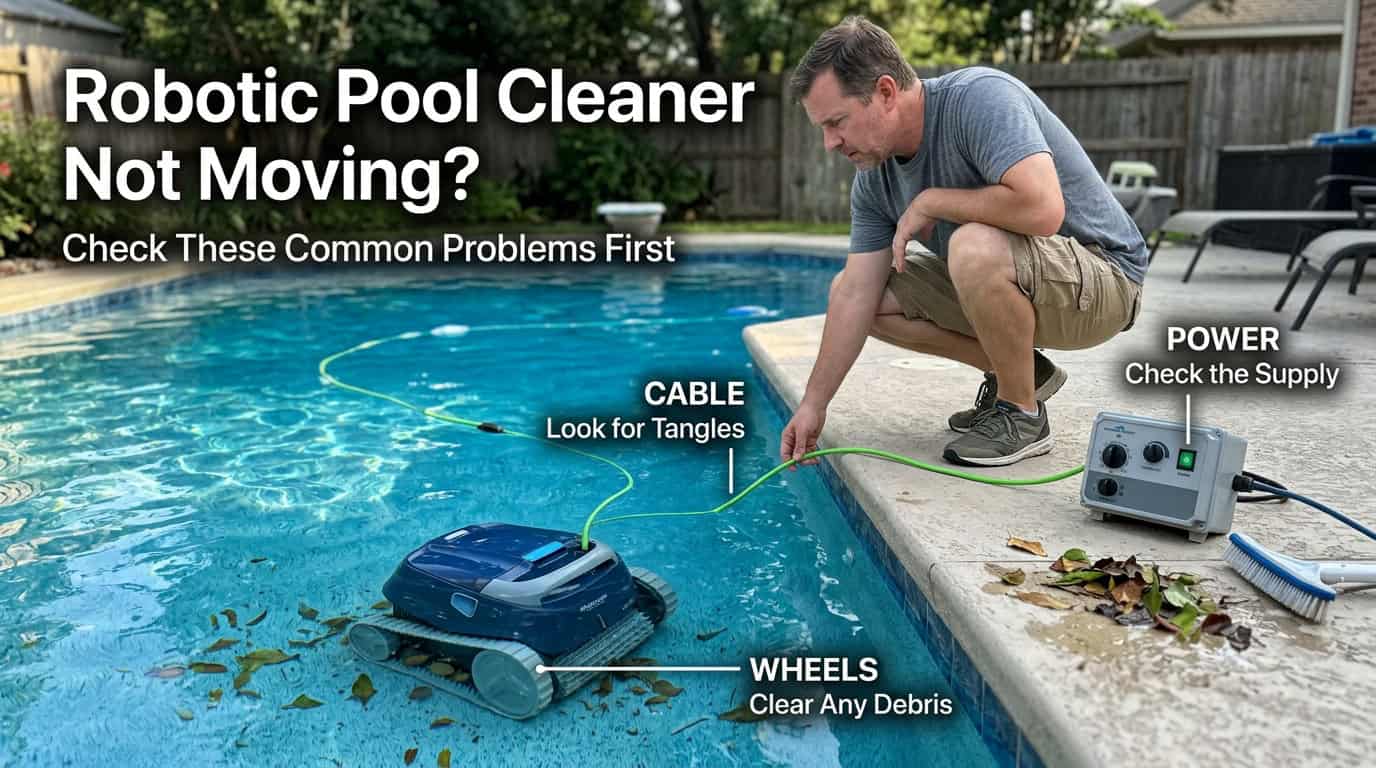
Confirm the cord is fully plugged into the power supply/transformer, and that the transformer is plugged into a working outlet. Check for an indicator light on the power supply confirming it’s receiving power. A tangled floating cable can also pull the cord taut enough to disconnect it, straighten the entire cable before starting a new cycle.
2. Clean the Filter
This is the single most common cause of a robotic cleaner that has power but won’t move properly, or that stops mid-cycle. A clogged filter restricts water flow, and many models have a built-in protection function that automatically halts the cleaning cycle when flow drops below a safe threshold. Remove the cleaner from the pool, open the unit, empty out debris, and rinse the filter thoroughly with a garden hose. Do not use a pressure washer on the filter material, the concentrated spray can damage it. Also confirm the filter is properly reseated afterward, an incorrectly installed filter blocks flow just as effectively as a dirty one.
If Power and Filter Are Fine, Check for a Physical Blockage
3. Debris Wrapped Around the Tracks or Wheels
Long hair, a pool cover cord, elastic bands, or fibrous leaf material can wrap around the axle and physically stop the tracks from turning. If the robot makes motor noise but doesn’t actually move, this is very likely the cause. Power off the unit, remove it from the water, and check the tracks and wheels for anything wrapped around them, removing debris by hand or with flat pliers.
4. Blocked Wheel from a Lodged Object
A small rock, twig, or piece of debris caught in a wheel can force the robot to pivot uselessly around one side instead of driving forward. Check both sides carefully.
5. Impeller Blockage
The impeller generates the suction and water circulation that helps the cleaner move and climb. Small debris can block it and affect motor operation; if the impeller can’t rotate freely, the unit may stop moving or shut down automatically. Inspect according to your model’s manual and clear debris gently without damaging the blades.
Less Common but Real Causes
6. Worn or Damaged Drive Belt
On models with a belt-driven track system, a worn or snapped belt stops the wheels from turning even though the motor itself runs fine. Inspect the belt and tracks for visible wear or damage.
7. Getting Pinned by Main Drain Suction
If the cleaner keeps stalling in one specific spot near the main drain, strong suction there can physically pin it flat against the drain. The simplest fix for a robotic cleaner is to run it with the main pool pump switched off, removing the competing suction pull.
8. Faulty Sensors, Control Unit, or Battery (Cordless Models)
If everything mechanical checks out clean, the control unit or sensors that direct the robot’s movement may be at fault, this is genuinely harder to self-diagnose and often warrants manufacturer support. On cordless/battery-powered models specifically, degraded battery capacity over time can cause inconsistent movement or a cleaner that stops early; if runtime has been getting noticeably shorter, battery replacement may be the actual fix.
The Simple Reset Most People Skip
Most robotic cleaners don’t have a dedicated reset button. Unplug the power supply from the wall and wait about 30 seconds before reconnecting, this brief power cycle clears many minor internal errors and is worth trying before deeper troubleshooting, especially if the unit was working normally very recently.
Frequently Asked Questions
Why does my robotic pool cleaner keep getting stuck in the same spot?
Often a route-planning issue rather than a malfunction, corners, ladders, and handrails commonly trap cleaners that lack advanced navigation. If it’s specifically stalling near the main drain, try running the cleaner with the main pump off to remove competing suction.
Can heavy algae cause a robotic cleaner to stop moving?
Yes. Heavy algae clogs the filter quickly and makes pool surfaces slippery, causing the cleaner to lose traction and get stuck. Treat the algae first and run the cleaner again once the water clears rather than troubleshooting the robot itself.
My cleaner has power and makes noise but won’t move – what’s most likely?
Check the tracks and wheels first for wrapped debris (hair, cord fragments, elastic bands), this is the most common cause of a unit that’s clearly powered and running but not driving forward.
Bottom Line
Power and filter cleanliness resolve the majority of not-moving cases and take only a few minutes to check. If those are fine, physically inspect the tracks, wheels, and impeller for wrapped debris or blockages before assuming anything electronic has failed. Sensor, control unit, and battery issues are real but much less common, and are the right point to involve manufacturer support rather than continuing to guess. If you’re shopping for a more reliable replacement, our best robotic pool cleaner guide covers solid options under $500.
If you’d rather switch to a simpler manual option while troubleshooting, see our guide to the best pool vacuums.