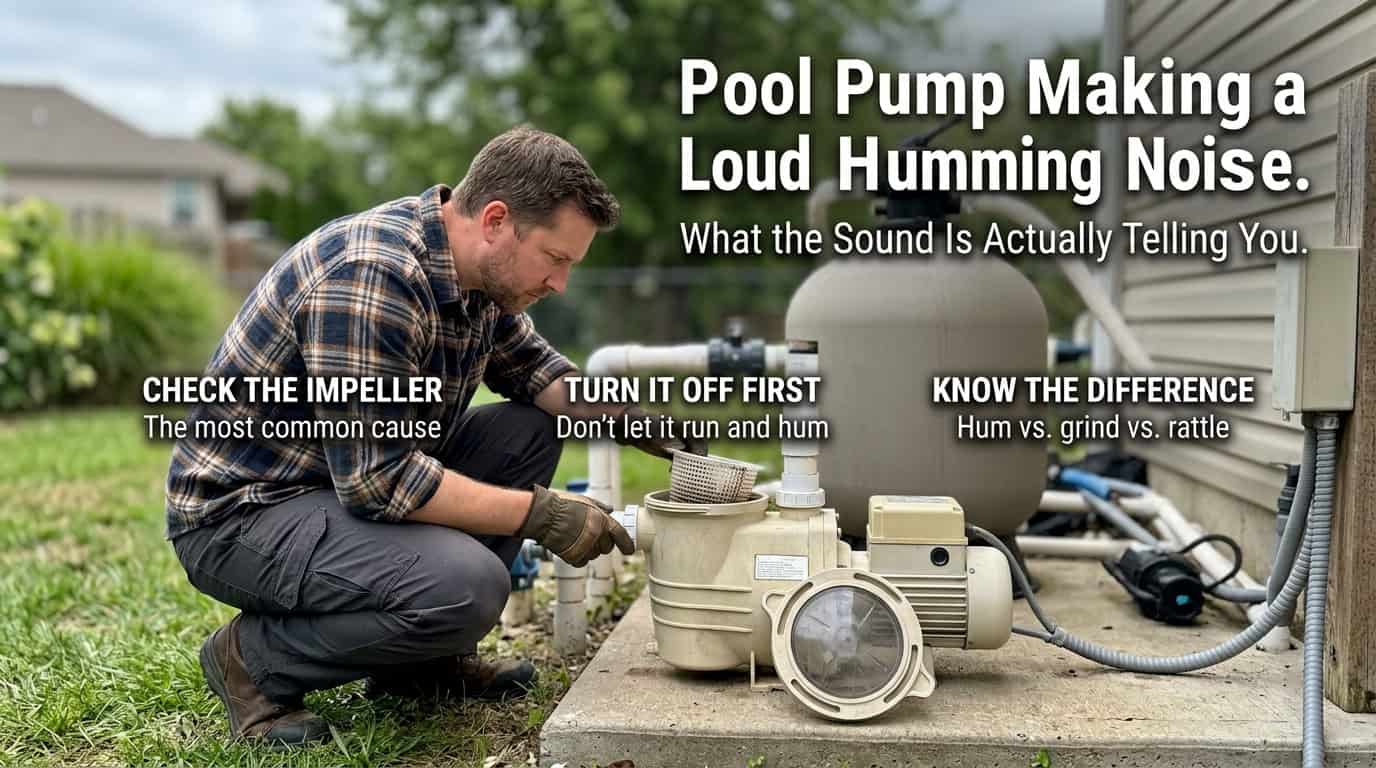
Pool Pump Making a Loud Humming Noise
A humming pool pump is telling you something specific: the motor is energized and trying to run, but something is preventing it from spinning normally. That’s genuinely useful information, because it narrows the cause down from the whole pump to a short list of specific parts. Here’s how to work through them.
What Humming Actually Means
A pump that hums but doesn’t start (or spins weakly) usually means the motor has power but is being physically or electrically prevented from turning freely. This is different from a pump that runs normally but sounds louder than usual, that’s a separate set of causes covered near the end of this guide. Turn the pump off immediately if you hear a loud, sustained hum with no water movement, letting it continue can burn out the motor.
1. Jammed or Blocked Impeller
This is the most common cause of a humming, non-starting pump. Debris, a small rock, or buildup can lodge in the impeller and physically prevent it from spinning, so the motor just hums against the resistance. Turn off power, open the pump housing, and use a screwdriver or hooked tool to check for and clear any obstruction in the impeller.
2. Failing Capacitor
The capacitor stores the energy needed to kick-start the motor. If it’s damaged, weak, or has failed, the motor may hum continuously without ever building enough torque to actually start spinning. A swollen, bulging, or visibly leaking capacitor is a clear sign it needs replacement; a multimeter can confirm a capacitor that looks fine but has failed internally. Capacitor replacement is a relatively simple, inexpensive repair, but involves electrical components and stored charge, this is a reasonable one to hand to a pool tech or electrician if you’re not comfortable working near a capacitor.
3. Motor Bind or Worn Bearings
If the impeller is clear and the capacitor tests fine, worn bearings can prevent the shaft from turning freely, producing a hum (and often a grinding sound as it worsens). Bearing replacement usually requires motor disassembly; on an older pump, replacing the whole motor is frequently more cost-effective than a bearing repair.
4. Electrical Supply Issues
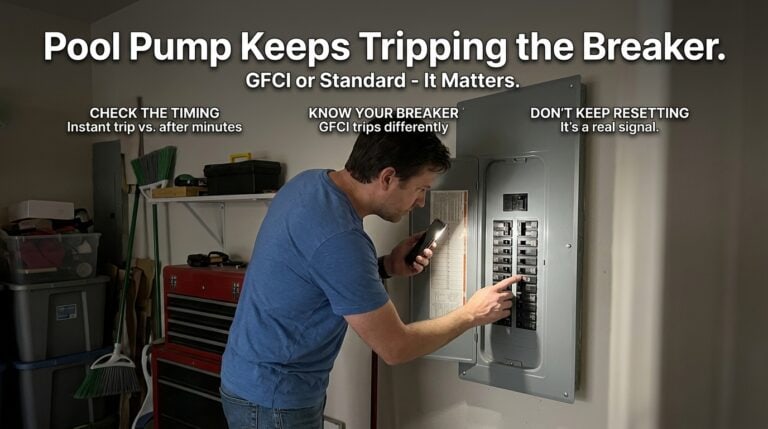
Loose wiring connections or a power supply problem can also cause a hum without full startup. This overlaps with the breaker-tripping causes covered in our breaker-tripping guide, and is worth checking if the hum comes and goes or seems to correlate with anything electrical.
5. Cavitation Damage from Running Dry
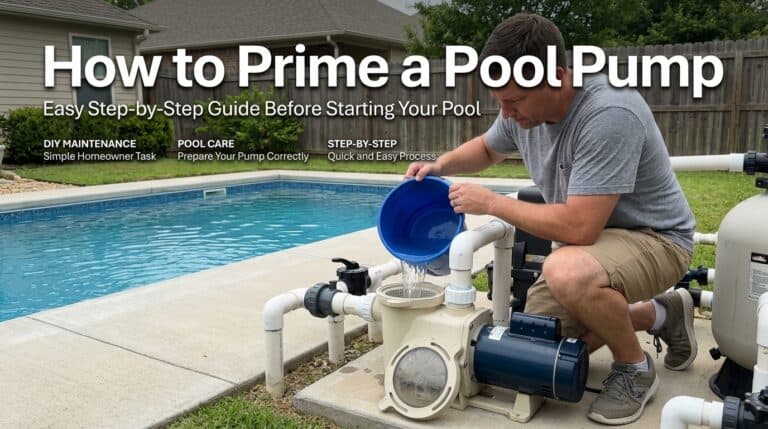
If the pump has been run without proper prime for an extended period, water inside can overheat, and in severe cases the resulting heat damages the impeller and the pump’s inner lining. One specific failure mode: a brass insert inside the impeller shaft can detach from prolonged dry running, which produces a distinct loud rattle rather than a smooth hum. If you suspect the pump ran dry recently, see our guide on how to prime a pool pump and open the lid to inspect for melted plastic or damage to the inner housing before assuming it’s a simple capacitor issue.
Normal Hum vs. Problem Hum
A very slight, quiet hum during normal operation is nothing to worry about, all motors make some noise. What to actually pay attention to: a loud, sustained hum with no water movement, buzzing, vibration you can feel through the pad, or any metallic knocking. Those indicate air, debris, or wear, not a healthy running pump.
If the Pump Runs But Sounds Louder Than Normal
This is a related but different situation, the motor is actually turning and moving water, it just sounds off. Common causes: a dirty filter increasing strain on the pump (rinse or backwash it), the pump not sitting flat on its pad or base (loose bolts or a missing vibration pad), or corroded/loose fittings. Tightening mounting bolts and adding a vibration-absorbing pad under the pump resolves a surprising amount of this category.
Frequently Asked Questions
Why does my pool pump hum but not turn on?
This almost always means the motor has power but can’t spin freely, most commonly from a jammed impeller or a failing capacitor. Check the impeller for debris first since it’s the easiest and most common fix.
Can a humming pump damage itself if I don’t fix it right away?
Yes. A motor humming against resistance is drawing current without doing useful work, which generates heat. Leaving it running in this state risks burning out the motor. Turn it off and troubleshoot rather than letting it run and hoping it starts.
Is a slight hum from my pool pump normal?
Yes, a quiet, consistent hum during normal running operation is typical motor noise. The concern is a loud, sustained hum paired with no water movement, or any new buzzing, vibration, or metallic sound that wasn’t there before.
Bottom Line
Check the impeller for debris first, it’s the fastest, most common fix and requires no special tools. If that’s clear, a failing capacitor is the next most likely cause. Worn bearings and cavitation damage from running dry are less common but more involved to fix, and both are reasonable to hand off to a professional once you’ve ruled out the simple causes.
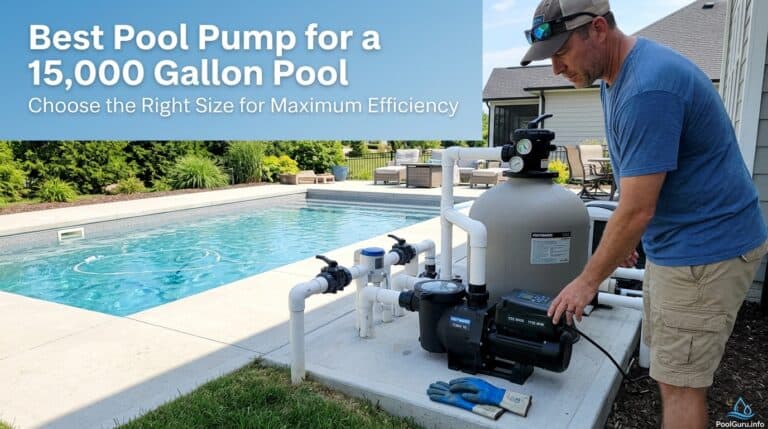
If the hum turns out to be terminal and you’re shopping for a replacement, see our picks for a 15,000 gallon pool pump.