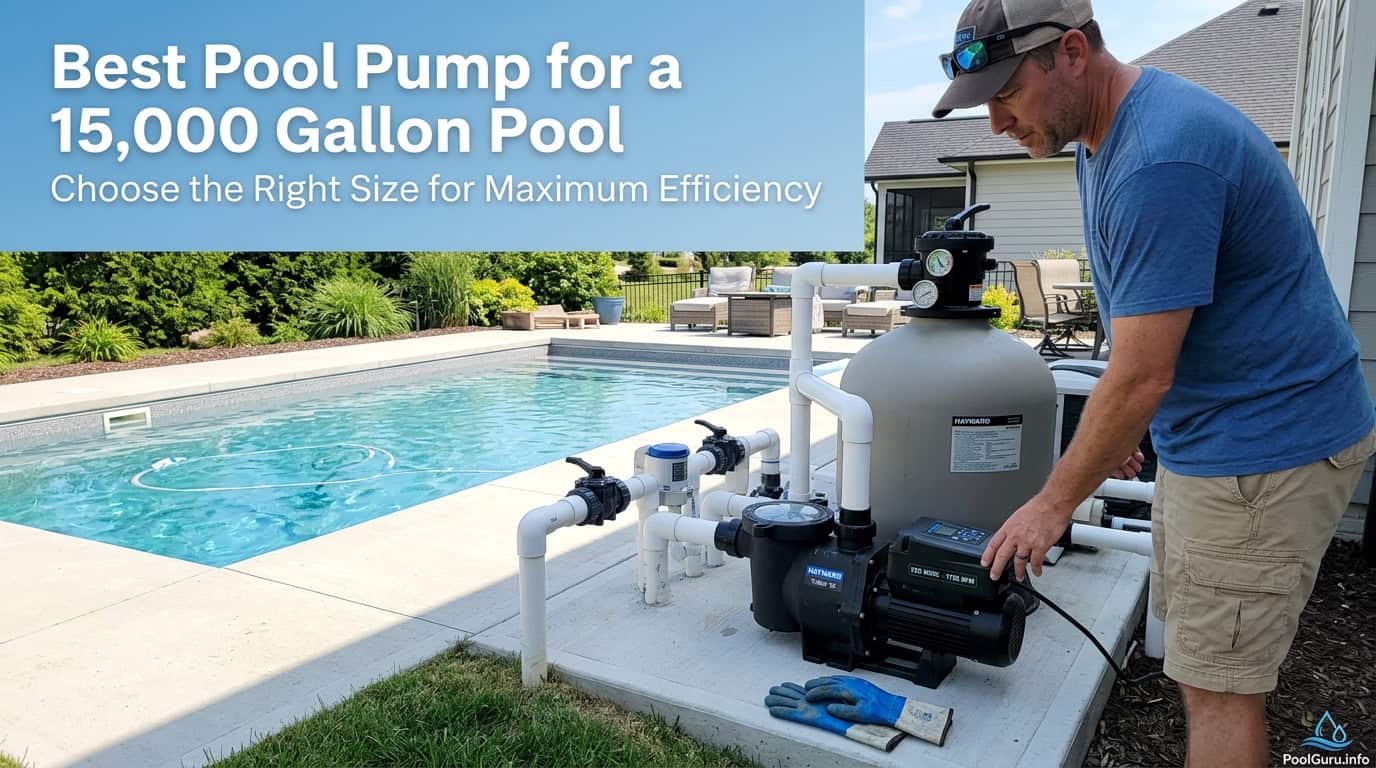
Best Pool Pump for 15,000 Gallon Pool: Top Picks That Actually Fit
Most pump buying guides are written for 30,000-gallon inground pools
and dressed up as universal advice. If you own a 15,000-gallon pool — one
of the most common residential sizes — you’ve probably noticed that nobody
actually does the sizing math for you. You’re left guessing whether 1HP is
enough, whether variable speed is worth the premium, and whether that $600
pump is overkill for your backyard setup.
Wrong pump means poor water circulation, cloudy water, and an electricity
bill that hurts every month. This guide does the turnover math for your
exact pool size, explains what actually matters at 15,000 gallons, and
narrows it down to the pumps worth buying — and one budget pick you should
skip.
| Product | Best For | Type | HP | Price Tier | Buy |
|---|---|---|---|---|---|
| Pentair IntelliFlo3 VSF | Best Overall | Variable Speed | 1.5 HP | Premium | Check Price on Amazon |
| Hayward MaxFlo VS W3SP2303VSP | Best Mid-Range Variable Speed | Variable Speed | 1.65 HP | Mid-Premium | Check Price on Amazon |
| Hayward Super Pump SP2610X15 | Best Single Speed | Single Speed | 1.5 HP | Budget–Mid | Check Price on Amazon |
| Pentair EC-011057 IntelliFlo VS+SVRS | Best for Safety-Conscious Buyers | Variable Speed + SVRS | 3 HP | Premium | Check Price on Amazon |
| Hayward W3SP1580X15 PowerFlo Matrix | Best for Above-Ground Pools | Single Speed | 1.5 HP | Budget | Check Price on Amazon |
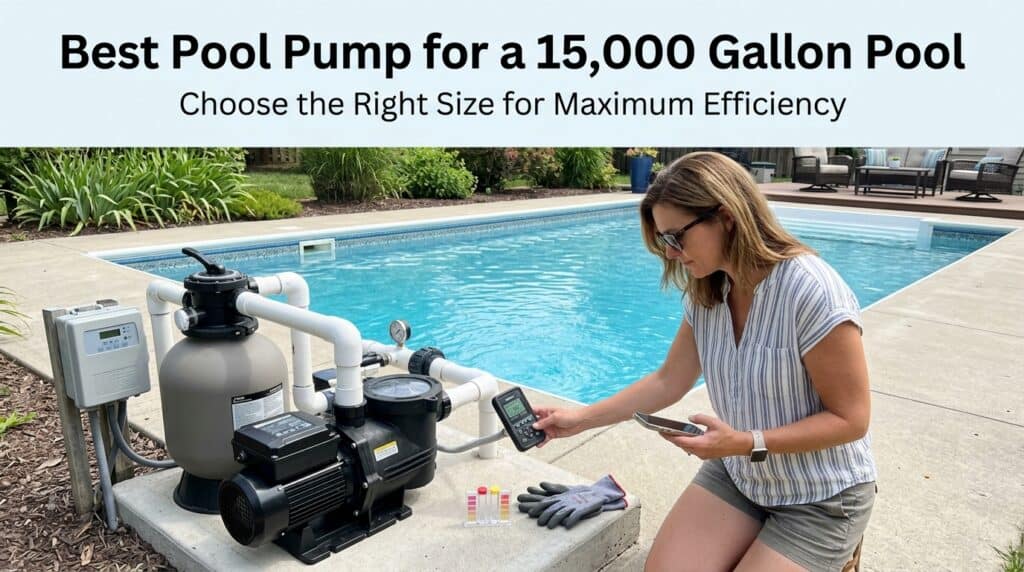
Best Pool Pump for 15,000 Gallon Pool: Our Top Picks
1. Pentair IntelliFlo3 VSF — Best Overall for 15,000 Gallon Pools

The Pentair IntelliFlo3 VSF is the pump I’d put on a 15,000-gallon pool
without hesitation. It’s variable speed, Energy Star certified, and built
around Pentair’s proprietary flow-sensing technology — meaning it
automatically adjusts to hit the exact flow rate your pool needs rather
than just running at full blast. For a 15k pool that needs roughly
31–35 GPM to achieve two full turnovers in 8 hours, this pump handles it
efficiently without wasting energy on unnecessary speed.

What separates the IntelliFlo3 from older variable speed options is the
built-in flow meter. Most VS pumps let you set an RPM and hope it matches
your plumbing — the IntelliFlo3 lets you set a target flow rate in GPM and
it holds it precisely. For a 15k pool owner trying to optimize for two
daily turnovers on the lowest power setting, this matters. Real-world
energy bills from owners running it on 15–18k gallon pools typically land
under $70/year at 8 hours per day. Compare that to $180+ for a single-speed
equivalent and the math becomes obvious inside three swimming seasons.

It’s also compatible with saltwater systems, works with most major
automation platforms (Pentair EasyTouch, screenlogic, and most third-party
systems), and comes with a 3-year warranty. The installation requires a
licensed electrician for the 230V wiring if you’re replacing a
single-speed — budget $100–$200 for that if you’re not DIY-comfortable.

Who it’s for: Inground 15,000-gallon pool
owners who want the lowest long-term operating cost and don’t mind the
upfront investment. Ideal for pools running 8+ hours daily.
Who it’s NOT for: Above-ground pool owners
(plumbing mismatch), anyone looking for a sub-$300 solution, or pools
under 10,000 gallons where this is genuine overkill.
Known weakness: Premium price upfront. The touch panel
interface takes a few minutes to learn. Not ideal for pools with very
short plumbing runs where a smaller pump would do the job.
Check current price on Amazon →
2. Hayward MaxFlo VS W3SP2303VSP — Best Mid-Range Variable Speed Pick

If the IntelliFlo3 is more pump than your budget allows, the Hayward
MaxFlo VS is the honest answer at this pool size. It’s a true variable
speed pump — not a budget imitation — rated at 1.65 HP with 5-speed
programming and an intuitive digital interface that most pool owners can
program without reading a manual twice. For a 15,000-gallon pool, it
delivers ample flow across its speed range, and Hayward’s build quality
at this price tier is difficult to beat.
The MaxFlo VS is designed specifically as a direct replacement for
most 1.5 HP full-rated single-speed pumps — which means if you’re
upgrading from an aging Super Pump or a competitor’s single speed, this
swaps in with minimal plumbing changes. Energy savings run $80–$120 per
year on a 15k pool compared to single speed, putting break-even around
2–3 seasons depending on your current electricity rate. It’s UL Listed,
saltwater compatible, and meets current DOE energy efficiency requirements.

The main trade-off versus the IntelliFlo3 is the lack of built-in flow
sensing — you’re setting RPM rather than target GPM, which means a bit more
manual calibration upfront. It’s a small inconvenience, not a dealbreaker.
For most 15k pool owners who don’t want to pay the Pentair premium, this
is the right call.
Who it’s for: Inground 15,000-gallon pool
owners upgrading from single speed who want genuine variable speed savings
without the top-tier price tag.
Who it’s NOT for: Above-ground pool owners
(wrong pump head design), pools needing automation integration with
non-Hayward systems (compatibility varies).
Known weakness: No built-in flow meter — requires manual
RPM calibration. Customer support from Hayward can be slow on warranty
claims per owner feedback patterns.
Check current price on Amazon →
3. Hayward Super Pump SP2610X15 — Best Single Speed Option

The Hayward Super Pump has been the industry standard single-speed
pump for decades, and it’s still a legitimate choice in specific situations.
At 1.5 HP, it handles 15,000-gallon inground pools without straining,
it’s straightforward to install, and it’s priced for pool owners who
need reliable circulation without the upfront cost of variable speed.
If you’re running a seasonal pool in a mild climate for 4–5 months a
year, the single-speed math still works out reasonably.
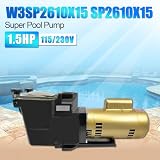
The Super Pump’s design is proven — wide-mouth strainer basket,
corrosion-resistant body, and a motor that pool techs have been servicing
for 20 years without mystery parts. It’s saltwater compatible, UL Listed,
and NSF/ANSI 50 certified. Parts availability is excellent. If your pump
fails on a July 4th weekend, you can find Super Pump replacement parts
at most local pool supply stores within an hour.

Here’s the honest trade-off: running this pump 8 hours a day on a
15k pool will cost approximately $170–$190 per year in electricity
depending on your local rate. A variable speed pump doing the same job
costs $50–$70. Over 5 years, that difference funds most of a variable
speed upgrade. If you’re in a northern climate running your pool
May–September only, the single-speed math is survivable. If you’re in
Florida or Texas running year-round, just get the variable speed — you’ll
regret this choice by year two.
Who it’s for: Budget-conscious inground
pool owners in seasonal climates, or anyone replacing a failed pump
quickly who can’t wait for a VS unit to ship.
Who it’s NOT for: Year-round pool runners,
anyone with a high electricity rate, or pools in states where single-speed
pumps above 1 HP are being phased out by efficiency regulations.
Known weakness: High operating cost compared to
variable speed. Runs louder than VS equivalents. Some US states have
introduced restrictions on single-speed pump installations — check your
local regulations before buying.
Check current price on Amazon →
4. Pentair EC-011057 IntelliFlo VS+SVRS — Best for Safety-Conscious Buyers

The Pentair EC-011057 IntelliFlo VS+SVRS adds something most pool pumps
don’t include: a built-in Safety Vacuum Release System (SVRS). This is
the entrapment protection system required by the Virginia Graeme Baker
Pool and Spa Safety Act for public pools — and while it’s not legally
required for most residential pools, if you have young children in the
water regularly, it’s a meaningful safety layer. The pump detects
abnormal suction patterns consistent with drain entrapment and
automatically cuts power to the motor.

Beyond the SVRS, it performs as a full variable speed pump — 8-speed
programmable, Energy Star certified, and running on Pentair’s proven VS
motor platform. At 3 HP it’s sized above what a 15,000-gallon pool strictly
needs for turnover, but the variable speed range means you simply run it
at lower RPM settings for routine circulation and only push higher when
running water features or backwashing your filter. The energy consumption
at low-speed operation on a 15k pool is comparable to the IntelliFlo3.

The honest flag here: this is an older IntelliFlo platform (VS, not
VSF) — it doesn’t have the built-in flow-sensing of the IntelliFlo3.
You’re paying for the SVRS safety feature, not for cutting-edge flow
technology. If child safety is a priority for your pool setup,
this is worth the premium. If it isn’t a specific concern,
the IntelliFlo3 is the better modern choice.
Who it’s for: Families with young children,
pool owners who want VGBA-level drain safety on a residential pool,
inground 15k+ pool setups.
Who it’s NOT for: Adult-only households
where SVRS isn’t a priority, above-ground pools, or buyers who want
the latest flow-sensing technology.
Known weakness: Older VS platform — no built-in flow
meter. The 3HP rating is oversized for 15k pools at face value, though
low-speed operation compensates. Heavier price tag than the MaxFlo VS
without a corresponding performance gain for standard use.
Check current price on Amazon →
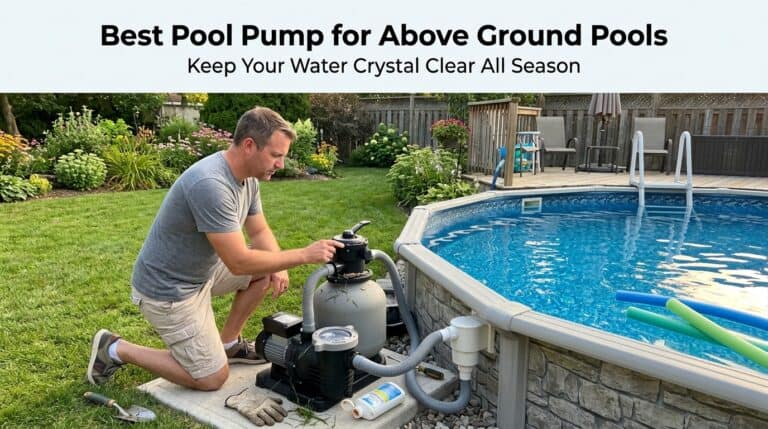
5. Hayward W3SP1580X15 PowerFlo Matrix — Best for Above-Ground 15,000 Gallon Pools

Above-ground 15,000-gallon pools are a different animal from inground
setups — smaller pipe diameters, lower pressure ratings, and a need for
a pump that won’t blow out the fittings your pool came with. The
PowerFlo Matrix is built specifically for above-ground pools, which
is exactly why it belongs on this list while the other four options
don’t. At 1.5 HP it delivers the flow a 15k above-ground pool needs
without creating pressure problems the plumbing can’t handle.

The design is straightforward: top-mount strainer lid for easy
debris access, dual-voltage capability (115V/230V), and Hayward’s
standard reliability. It uses 1.5″ fittings that match most Intex,
Bestway, and Coleman above-ground pool plumbing standards. Installation
for an above-ground pool owner is genuinely DIY-friendly — most people
complete it in under an hour without tools beyond a screwdriver and
some teflon tape.

It’s a single-speed pump, so it carries the same energy cost
trade-off as the Super Pump — roughly $150–$170/year running 8 hours
daily. For an above-ground pool owner who may not keep the pool more
than a few seasons, that’s acceptable. If you plan to keep your
above-ground pool 5+ years, look at whether an above-ground-rated
variable speed option fits your budget.
Who it’s for: Above-ground 15,000-gallon
pool owners (Intex, Bestway, Coleman) needing a reliable,
correctly-sized replacement or upgrade pump.
Who it’s NOT for: Inground pool owners
(wrong pump head design), saltwater system setups (verify compatibility
before purchase), anyone wanting variable speed efficiency.
Known weakness: Single speed — higher energy cost
long-term. Not designed for inground pools. No variable speed option
in this product line from Hayward.
Check current price on Amazon →
How to Choose the Right Pool Pump for a 15,000 Gallon Pool
Step 1 — Calculate the Flow Rate Your Pool Actually Needs
Here’s the math most guides skip. A 15,000-gallon pool should turn
over its full volume at least twice every 24 hours. Most pool pros
target two turnovers in 8 hours of pump run time. That gives you:
- 2 turnovers × 15,000 gallons = 30,000 gallons to move in 8 hours
- 30,000 ÷ 8 hours = 3,750 GPH (gallons per hour)
- 3,750 ÷ 60 minutes = ~62.5 GPM minimum
Every pump on this list comfortably exceeds 62.5 GPM at appropriate
speed settings. What this math tells you is that an undersized
0.75 HP pump will struggle, but you also don’t need a massive 2+ HP
single-speed running full blast to hit this target.
Step 2 — Variable Speed vs Single Speed: The Real Cost Difference
This is where most buyers get it wrong by focusing only on purchase
price. Here’s the honest cost picture for a 15,000-gallon pool running
8 hours per day at the US average electricity rate of $0.16/kWh:
| Pump Type | Annual Energy Cost | 5-Year Energy Cost |
|---|---|---|
| Single Speed 1.5 HP | ~$175–$190/year | ~$875–$950 |
| Variable Speed (low setting) | ~$50–$75/year | ~$250–$375 |
| Savings with VS | ~$115–$130/year | ~$500–$575 saved |
A variable speed pump that costs $300 more upfront pays for itself
in energy savings in 2–3 seasons. If your pool is open more than 5
months a year, variable speed is the right call financially —
not just the environmentally responsible one.
Step 3 — Above-Ground vs Inground: Different Pumps, Different Rules
This matters more than most guides admit. Above-ground pools use
lower-pressure plumbing — typically 1.5″ hose connections rated for
much lower PSI than inground PVC plumbing. Installing an inground pump
on an above-ground pool can damage your hose fittings, blow connections,
or void your pool warranty. The PowerFlo Matrix on this list exists
specifically for above-ground pools. The IntelliFlo3, MaxFlo VS,
Super Pump, and IntelliFlo VS+SVRS are inground pumps.
Rule: If your pool sits on the ground
and came in a box, use an above-ground pump. If your pool was built
into the ground with a concrete or vinyl liner structure,
use an inground pump.
Step 4 — Saltwater Compatibility
If you run a salt chlorine generator, confirm saltwater compatibility
before buying. All pumps on this list are saltwater compatible except
the PowerFlo Matrix — verify your specific setup before purchasing
that one. Saltwater corrosion attacks pump seals and motor housings
over time on equipment not designed for it.
Step 5 — Certifications That Actually Matter
- UL Listed — Electrical safety. Non-negotiable.
- NSF/ANSI 50 — Pool equipment performance
standard. A genuine quality signal. - Energy Star — Meaningful for variable speed pumps.
Confirms real efficiency gains. - VGBA Compliant / SVRS — Drain entrapment
protection. Critical for families with young children.
What Most 15,000 Gallon Pool Owners Get Wrong
- Oversizing HP — A 3 HP pump running full speed
on a 15k pool creates excessive flow and pressure that can damage
your filter and plumbing over time. If you buy the IntelliFlo
VS+SVRS 3HP, run it at low RPM settings — don’t let it run at
full power routinely on a 15k pool. - Ignoring pipe diameter — 1.5″ vs 2″ plumbing
affects actual flow rate significantly. Check your existing plumbing
before sizing a replacement pump. - Buying single speed in a regulated state —
California, Arizona, and several other states have restrictions on
single-speed pool pump installations above 1 HP. Check your local
regulations before purchasing the Super Pump.
What Size Pool Pump Do I Need for a 15,000 Gallon Pool?
For a 15,000-gallon pool, you need a pump capable of at least
62 GPM (3,750 GPH) to achieve two full water turnovers in 8 hours.
A 1–1.5 HP pump covers this comfortably. Variable speed pumps are
the most efficient choice at this size, saving $100–$130 per year
over single-speed models. For above-ground pools specifically,
use an above-ground-rated pump like the Hayward PowerFlo Matrix.
Frequently Asked Questions
Is 1 HP enough for a 15,000 gallon pool?
It depends on your plumbing. A 1 HP pump can typically move enough
water for a 15,000-gallon pool to achieve two turnovers in 8 hours if
your plumbing runs are short and your pipe diameter is 2″. On longer
runs or 1.5″ plumbing, 1.5 HP is the safer choice to avoid the pump
straining at full load continuously.
How long should I run my pool pump on a 15,000 gallon pool?
Run it long enough to turn over the pool volume twice — 8 hours is
the standard recommendation. Variable speed pumps can run longer at
lower speed settings without significantly increasing energy costs,
which actually improves filtration quality.
Is variable speed worth it for a 15,000 gallon pool?
Yes — unambiguously. The energy savings on a 15k pool running
8 hours/day typically reach $110–$130 per year compared to single
speed. A VS pump that costs $250 more upfront pays for itself in
under 2.5 seasons. The only exception is a seasonal pool in a very
short-summer climate running fewer than 3 months per year.
Can I use an inground pool pump on an above-ground pool?
No. Inground pumps are designed for higher-pressure plumbing systems.
Using one on an above-ground pool with standard hose fittings risks
blowing connections and damaging your pool equipment. Use an
above-ground-rated pump like the Hayward PowerFlo Matrix.
Does the Pentair IntelliFlo3 work with saltwater pools?
Yes. The IntelliFlo3 VSF is fully saltwater compatible and is one
of the more popular choices among saltwater pool owners specifically
because of its precise flow control — useful for dialing in the exact
flow rate your salt chlorine generator requires.
Final Verdict: Which Pool Pump Should You Buy for a 15,000 Gallon Pool?
Here’s the straight answer:
- Best overall — Pentair IntelliFlo3 VSF: If you
can absorb the upfront cost, this is the pump to buy. Flow-sensing
technology, Energy Star certified, lowest long-term operating cost.
Worth every dollar on a 15k inground pool. - Best value variable speed — Hayward MaxFlo VS:
Real variable speed performance at a lower entry price. The honest
choice for inground pool owners who want VS savings without the
Pentair premium. - Best single speed — Hayward Super Pump SP2610X15:
Only justified if you’re in a short-season climate or need a fast
replacement. Otherwise, spend the extra money on variable speed. - Best for families — Pentair IntelliFlo VS+SVRS:
The SVRS entrapment protection is a genuine safety feature worth
having if children swim in your pool regularly. - Best above-ground — Hayward PowerFlo Matrix:
The only pump on this list designed for above-ground pools.
If your pool sits on the ground, this is your pick.
Check Current Prices on Amazon
- Pentair IntelliFlo3 VSF — Check current
price on Amazon - Hayward MaxFlo VS W3SP2303VSP — Check
current price on Amazon - Hayward Super Pump SP2610X15 — Check
current price on Amazon - Pentair EC-011057 IntelliFlo VS+SVRS —
Check current price on Amazon - Hayward PowerFlo Matrix W3SP1580X15 —
Check current price on Amazon
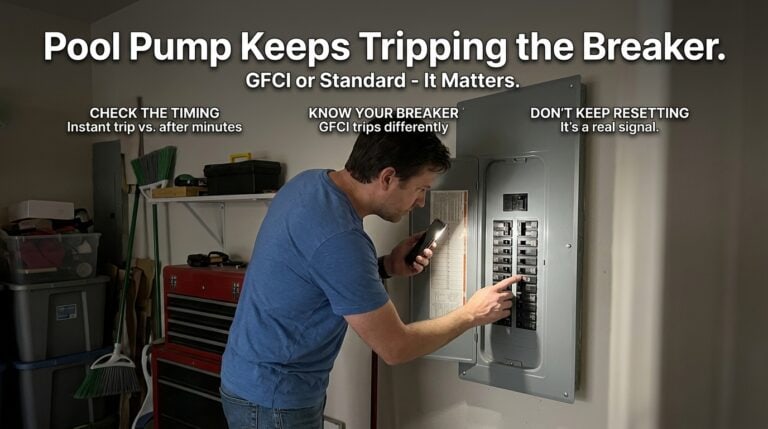
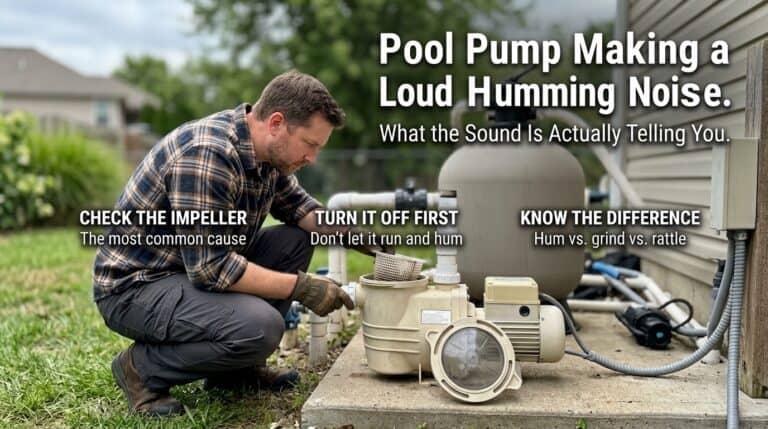
Already own a pump and dealing with a problem rather than shopping? See our guides on why pool pumps trip breakers and why pool pumps make a loud humming noise.